Dear Visitor | | IOW's NEWSLETTER #13
March 2026
Thank you for subscribing to IOW's Newsletter!
By subscribing to IOW’s Newsletter, you will be updated about the latest keywords uploaded, and provided news about the project in general and the activities of IOW's collective. The Newsletter will also disseminate Calls for conferences and publications connected to issue of Othering.
And you can become an active participant to IOW's dictionary, by proposing and discussing words that are used to (re)produce different forms of Otherness, and/or suggesting keywords that you would like to be discussed! You can visit regularly www.iowdictionary.org to find further info on keywords and on how to join the project. |
|
|---|
New entries
- casta by Natalia Ortesio Ruiz. From the perspective of media and political discourse analysis and interaction analysis, the author examines the use and meaning of this term as defined and employed by Javier Milei, the actual president of Argentina. Far from being a neutral word, it serves as a label for the political class and those seen as complicit in its corruption— a term marked by contempt and hostility, whose discursive construction will be the focus of this analysis.
- echo chambers by Desislava Angelova. Through a multidisciplinary approach, which takes into account psychological, social, rhetorical, and political dynamics as well as technological mechanisms (such as algorithmic filtering and platform architectures), the entry discusses echo chambers as a contemporary phenomenon in digital communication. Echo chambers frame, disseminate, and promote ideas and opinions which confirm pre-existing beliefs, thus reproducing persistent informational isolation.
Fortcoming entries
- boiler by Class 2A, G1. In their analysis, students reflect on what defines the normative ideal of female body for women in general and girls in particular, discussing how beauty canons are imposed on female bodies since a young age, and how female bodies who do not conform to these normative canons are targeted by derogatory words – such as ‘boiler’ and ‘golem’, which is here jointly analyzed –, as well as by processes of exclusion and discrimination both in-person and online.
- chelha by Ramdane Touati. This entry examines a term used in Tamazight (Berber), Arabic, and French to refer to languages and ethnic groups. In most contexts, aside from southern Morocco, the term signifies alterity—particularly concerning language—and often carries a pejorative connotation. Chelha specifically refers to a subaltern language that lacks recognition and legitimacy from others.
- hogra by Filippo Torre. Hogra (حقرة) is a word difficult to translate, generally meaning ‘humiliation’ or ‘oppression’ in the Arabic dialects of the Maghreb. It has become a strongly politicized term, an expression with a fluctuating meaning that immediately conveys a feeling of social and economic injustice shared by large segments of the Maghreb population. Today, the maḥgūr (the ‘humiliated’) is a social category with which thousands of oppressed youth on the southern shore of the Mediterranean identify, from the working classes to the middle classes.
- identities in postcolonial settings by Lamprini Chartofylaka & Maurizio Alì. Postcolonial identities are inherently multiple, hybrid, and contested, shaped by centuries of (post)colonial violence, cultural erasure, and administrative assimilation. Within these power dynamics, local communities continuously assert, reclaim, and re-signify their identities on their own terms. The authors will provide examples of how Otherness is challenged and transformed into collective cultural affirmation through traditional and contemporary (board) games in a very peculiar postcolonial context: French Antilles.
n-word by Class 2A, G2. How is the n-word perceived by Italian teenagers? How is it used within their peer interactions? From its colonial legacy to the contemporary reappropriations in hip hop tracks, students analyze how this derogatory word has travelled across violent discriminations and oppressions to acquire different significations according to the diverse contexts, speakers, and recipients. The students will finally focus on its present meanings in the Italian youth context, also presenting examples of reappropriations and subversions.
remake by Charleine Saad. The term 'remake' is associated with the reinterpretation of an existing work. So, how do remakes connect to Otherness? Do they promote a deeper understanding of the other or contribute to the emergence of resistance to the other values and cultural norms? Do they reshape narratives and challenge cultures and identities? Do they bridge the gap between foreignness and familiarity, and contribute to cultural diversity?
- trans by Victoria Odeniyi and Romain Potier. The keyword entry problematises contemporary uses of trans as largely unhelpful and discriminatory. Anti-trans discourses can hide racism and other forms of discrimination (social class, Islamophobia). There is growing evidence that the erasure of trans existence is part of a wider goal to maintain supremacy of one group of people over others.
|
|
|
|---|
IOWers at CONFERENCES, SEMINARS, WEBINARS
January-March 2026 - January, 30, online. BAAL (British Association of Applied Linguistics), Special Interest Group (SIG), Seminar in Intercultural Communication, critical and creative approaches. Paola Giorgis presented IOW dictionary as a free online resource where the critical and intercultural approach is combined with a call to creativity as an ethical/political praxis able to problematize, resignify, and subvert dominant knowledge structures.
- March, 5. Institute of Multilingualism, University of Fribourg, Fribourg, Switzerland. Within the Internal Workshop Encounters of the Institute, the presentation of IOW dictionary by Paola Giorgis animated a discussion on the notions of Otherness and Normativity, and on how language can reproduce or challenge Otherness.
|
|
|
|---|
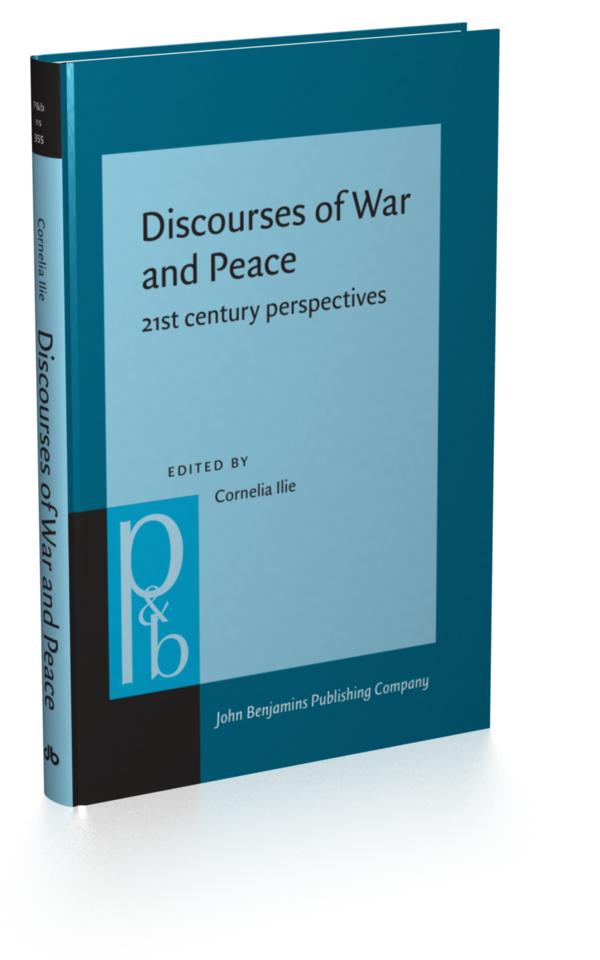
Ilie, C. (2026). (ed.) Discourses of War and Peace: 21st Century Perspectives. John Benjamins. https://benjamins.com/catalog/pbns.355?srsltid=AfmBOoqJ7bvSGIjvLzO52n3df9We2AFuyveYWtxGRS_jFnTOVu2zIEZl
From the Russo-Japanese war (1904–1905) to Russia’s war against Ukraine (2022-present), the volume explores of the overall scope, implications and consequences of shifting discourses of war, peace and neutrality across time and space, in relation to conflict-ridden geopolitical environments characterised by power struggles, political polarizations, divergent goal settings and ideological confrontations. |
|
|
|---|
CALL FOR PAPERS - PUBLICATIONS |
|
|---|
Ezikov Svyat – Orbis Linguarum (ISSN 1312-0484/eISSN 2603-4026) invites submissions for the Special Issue on language and food. |
|
|---|
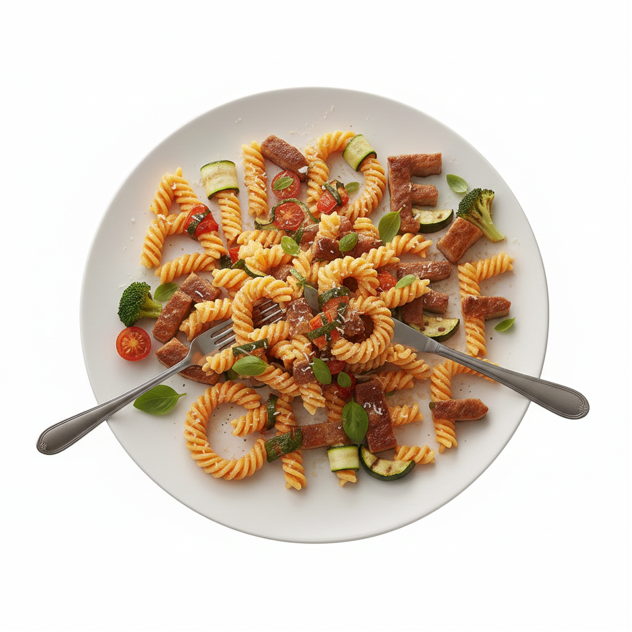
DON'T EAT YOUR WORDS! - The Languages of Food |
|
|---|
Situated at the intersection of nature and culture, food becomes a powerful tool for meaning-making through language understood in its broadest, multimodal sense. Food rhetoric uses linguistic, visual, and symbolic strategies to shape identities, emotions, communities, and political discourses, while food systems carry ecological, economic, and social consequences. The CfP invites interdisciplinary contributions on various topics that explore how food and language together construct social realities and political agendas.
| |
|
|---|
The Journal of Intercultural Education invites submissions for the Special Issue
Paulo Freire and His Legacy at Times of Educational Crises: Intercultural Insights. Paulo Freire’s work on education has often been received through binary perspective, being utopic among some groups and subversive among others in reference to pedagogical theories, practices and didactics.
To fill in this gap, this Special Issue on Paulo Freire’s work and legacy attempts to invite collaborations that can offer nuanced approaches based on theoretical, empirical, and practical teaching and learning experiences by uniting scholars, educators, and activists from diverse perspectives that can lead to new ideas, paths, and approaches that are congruent with present and future needs, demands, and desires of the 21st century.
Deadline for Abstracts: 30 May 2026 Abstracts: 300 words - except references
Full details here (pp.8-9):
https://iaie.org/wp-content/uploads/2026/03/IAIE_Newsletter_MARCH26.pdf
Please send your submissions to Special Issue Guest Editors:
Andrea Valente valente@yorkcu.ca Paola Giorgis paola.giorgis@iowdictionary.org |
|
|
|---|
CALL FOR PAPERS - CONFERENCES |
|
|---|
IAIE (International Association for Intercultural Education) & Hellenic Open University.
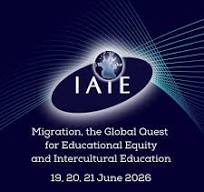
Migration, the Global Quest for Educational Equity, and Intercultural Education Dates: Athens, 19–21 June. Deadline: March 15 The IAIE International Conference will focus on the multiple challenges that educators face in their quest to create more just and inclusive societies. Some of these challenges, such as tackling global climate change and how to best promote diversity in schools and classrooms have been on the radar for some time.
Due to these space restrictions, the Conference will be accepting a maximum of 100-120 proposals/presentations across 3 strands.
STRANDS · Strand 1: Intercultural and Multicultural Education in times of Migration · Strand 2: Inclusion and diversity – the dynamics of intersectionality · Strand 3: Migrants, refugees and asylum seekers
Online submissions only, abstracts (approx. 300-400 words single-spaced), 4-5 key-words: https://www.conftool.org/iaie2026
More info: https://staging.iaie.org/wp-content/uploads/2025/12/IAIE-HOU2026_CALL-FOR-PAPERS.pdf
|
|
|---|
Universiteto g. 5 01122 Vilnius, Lituania Online MS Teams.
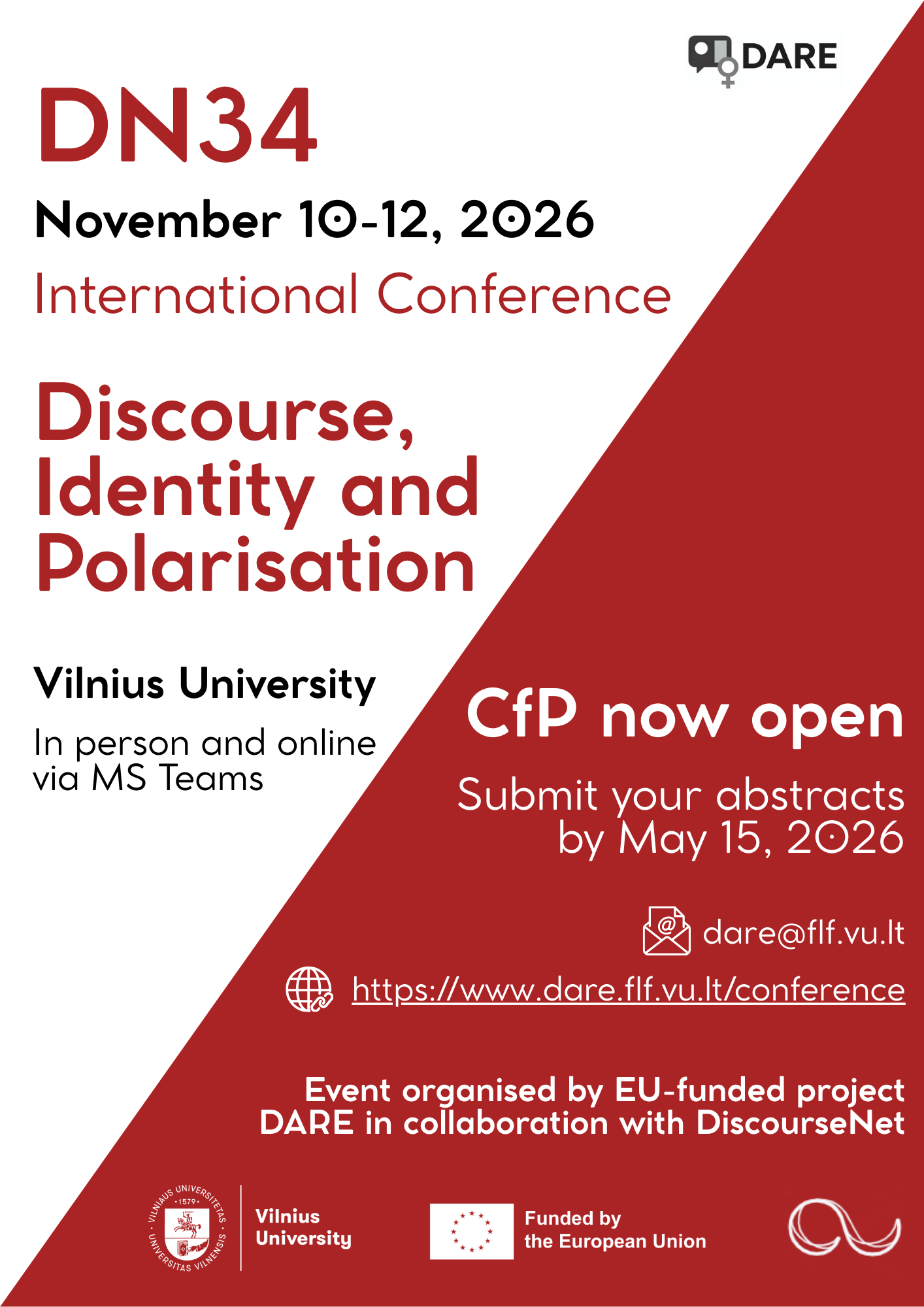
The DN34 International Conference on Discourse, Identity and Polarisation
Dates: 10/11/2026 - 12/11/2026
Deadline: 15/05/2026 In-person and online. This hybrid conference provides an interdisciplinary space for examining how individual and group identities are discursively constructed in today’s increasingly polarised societies, and how discourse both reflects and shapes emerging social divisions. In a context of political, cultural and epistemic fragmentation, identity is not only performed but also continually renegotiated through discourse. Submission guidelines:
Abstracts should be 250 – 400 words (including references) and anonymous.
Please specify the tentative presentation mode (online or offline). It would
be possible to switch once the choice has been made.
Use APA 7th edition style for references and include five keywords. Submit your abstracts via the conference submission platform:
https://www.dare.flf.vu.lt/registration
More info: https://www.dare.flf.vu.lt/call-for-papers
|
|
|---|
Transilvania University of Brasov, Romania. Department of Theoretical and Applied Linguistics 9th edition of the International Conference on Linguistics (Structure, Use, and Meaning - SUM) Language Unbound: Exploring Diversity, Innovation, and Connection Dates: 24-26 September 2026. Deadline: 20 June 2026 The conference invites us to examine how linguistic diversity flourishes in an interconnected world, how innovation reshapes communication practices, and how language continues to build meaningful connections across contexts, cultures, and communities. The conference provides a forum for researchers to explore language at the intersection of its formal properties, social functions, and semantic content. Contributions that challenge conventional boundaries – whether disciplinary, methodological, or theoretical – and that focus on the dynamic nature of human language are welcome. Thematic strands: · diversity · Innovation · connection More info at: https://sumbrasov.unitbv.ro/
|
|
|---|
Tampere University, Finland. Influence, Manipulation & Seduction 3: Interdisciplinary Perspectives on Persuasive Language Dates: 19-20 November Deadline: July 1, 2026
This symposium aims to spark dialogue and share insights on language and persuasion across diverse methodological and disciplinary approaches. Interdisciplinary and cross-disciplinary contributions that push the boundaries of how we understand influence and persuasion are particularly welcome.
Abstract length: 300 words excluding references.
Posters. All poster presenters are invited to give an optional lightning talk. Lightning talks are short (3-5 minutes), focused presentations on work in progress or smaller projects. It is also possible to do a poster without a lightning talk. Abstract length: 150 words excluding references.
Abstracts should be submitted in pdf format here: https://www.lyyti.fi/reg/persuasion2026cfp
Conference website: https://events.tuni.fi/persuasion2026/
Organising committee: Daria Dayter (Tampere University), Dominika Beneš Kováčová (Masaryk University Brno), Sofia Rüdiger (Freie Universität Berlin): persuasionconf@gmail.
|
|
|---|
We are looking forward to hearing your comments and suggestions, as well as to welcoming your contributions! In the meanwhile, take care & stay tuned!
Paola Giorgis on behalf of IOW's Editorial Board
For further info, please write to: info@iowdictionary.org
| |
|
|---|
|
|